
Sess. 3. 1. – Prof. Ulrika Stigsdotter
Landscape Architecture at Copenhagen University, Danemark
Focus: Evidence-based health design and the responsibility of shaping healing environments.
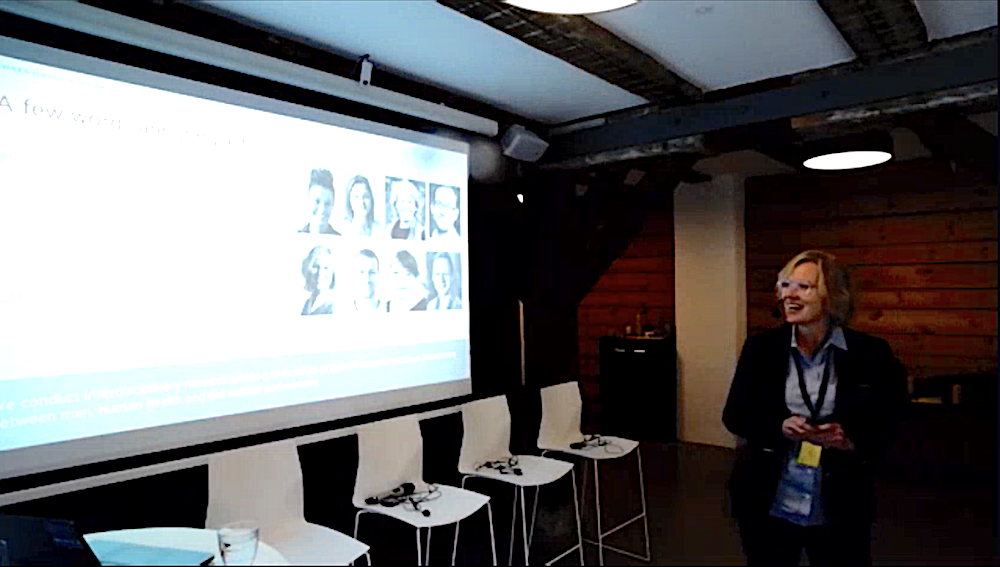

As a landscape architect she received her PhD degree from the Department of Landscape Planning Alnarp, Swedish University of Agricultural Sciences (SLU), where she also completed her graduate studies. Her background is in Landscape Planning and Art History, for which she holds two undergraduate degrees from SLU and Lund University.
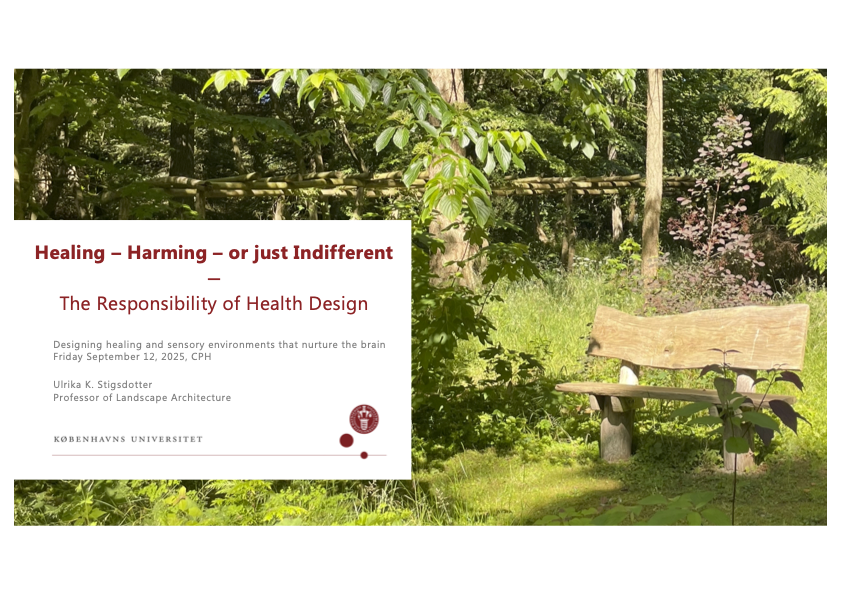
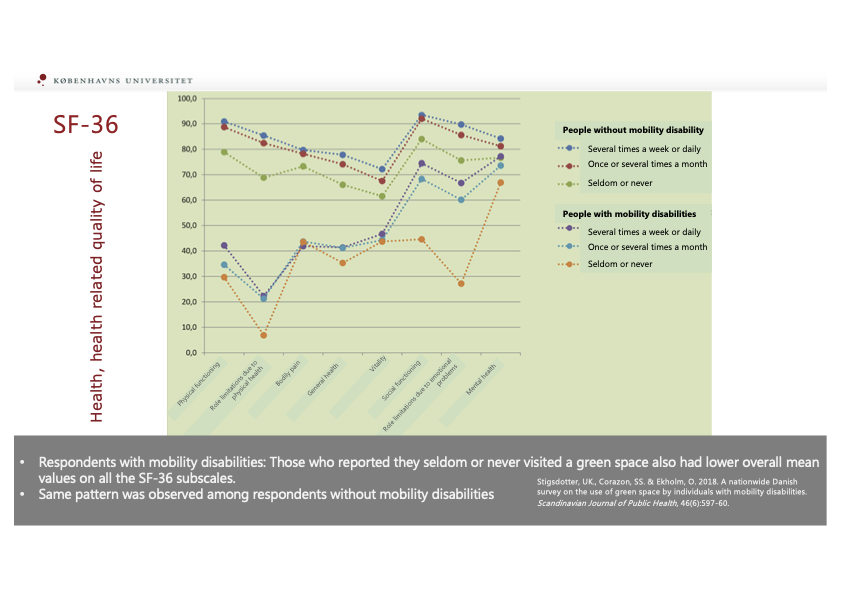
Ulrika Stigsdotter reflected on 25 years of research into the relationship between nature and health, introducing the concept of Health Design as the conscious creation of green spaces that measurably support well-being.
She emphasized that true health design demands interdisciplinary collaboration and a clear definition of desired health outcomes.
While urban green spaces mitigate heat, pollution, and stress, they only deliver benefits when people actively engage with them.
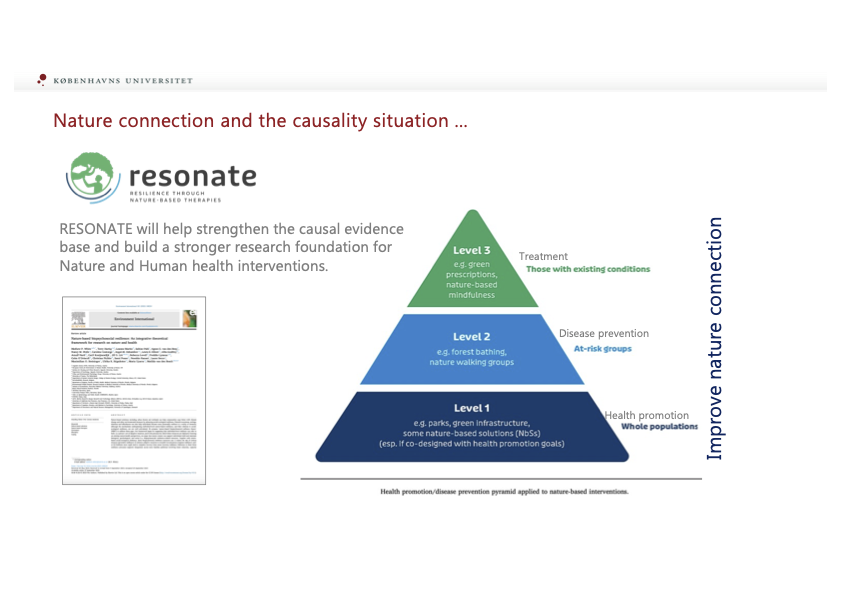
Through projects such as therapy gardens and the Horizon Europe RESONATE project, she explores how prevention, treatment, and recovery can be structured in nature-based settings.
Her findings show that frequent contact with nature correlates strongly with higher physical and mental health scores, yet accessibility and inclusion remain major barriers.
Designs that fail to consider users’ experiences can harm rather than heal, underscoring the ethical responsibility of designers.
Ulrika Stigsdotter called for systematic post-occupancy evaluation to ensure that intentions translate into measurable results.
The essence of her message: beauty and greenery alone are not enough — only quality, empathy, and evidence make urban nature truly restorative.
Sess. 3. 2. – Zakaria Djabbara – Associate Professor, Aalborg University
Brain–Body Architecture Research Group
Focus: Rhythms, perception, and the unconscious interaction between body, brain, and architecture.
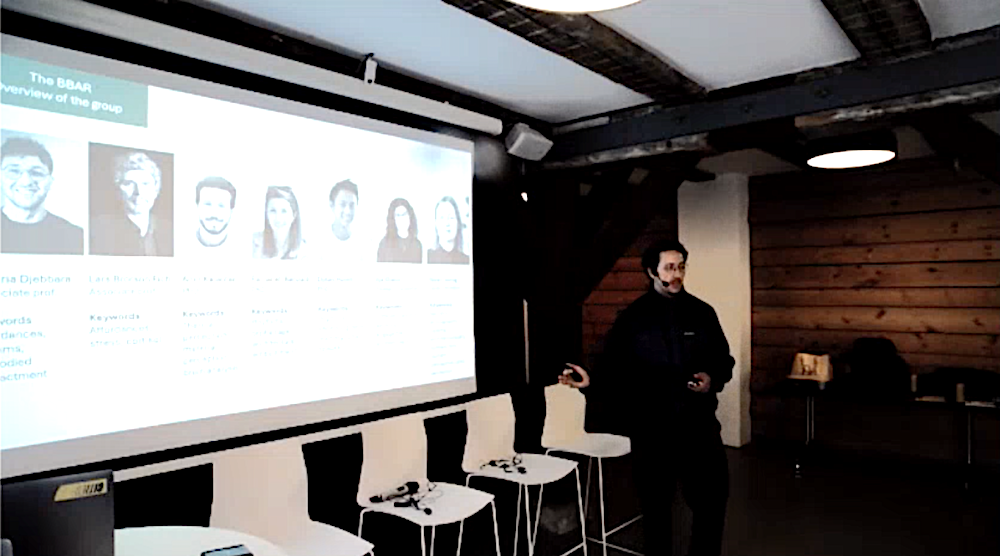
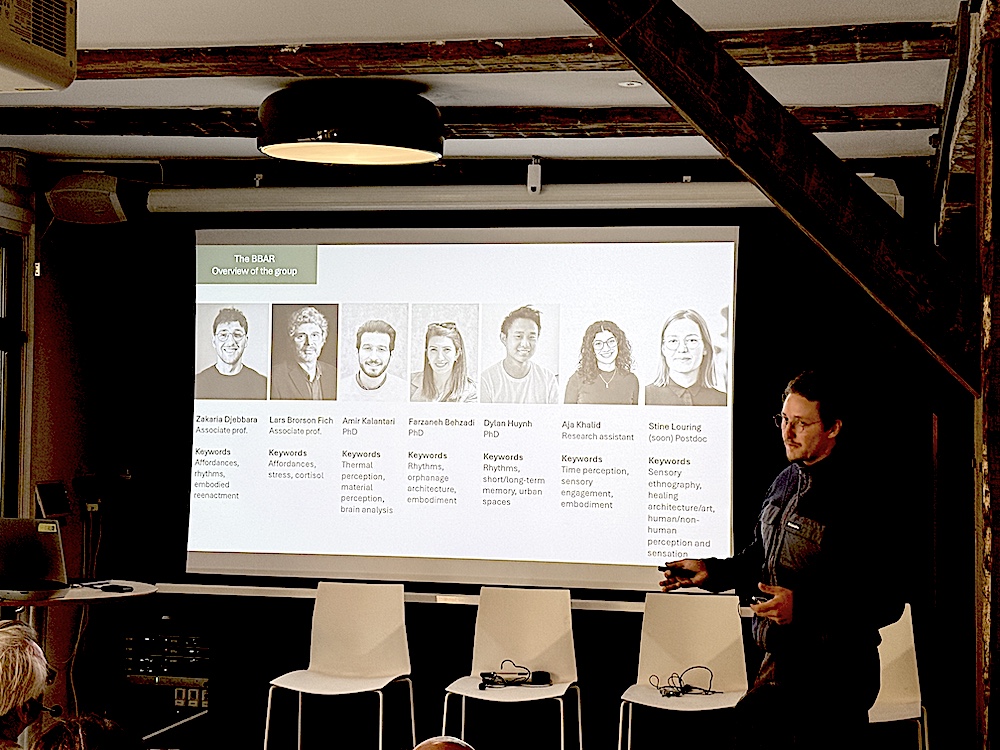

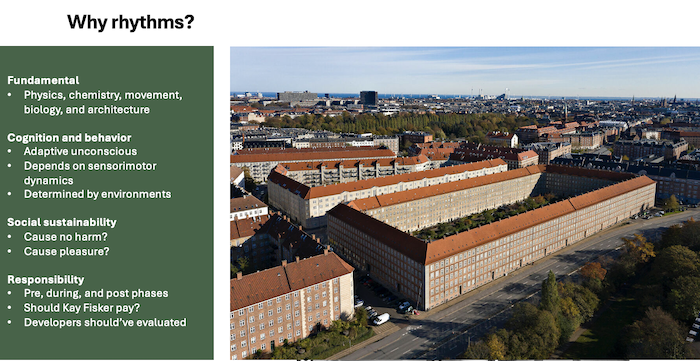

Researcher in the crossing of architecture and cognitive neuroscience. Particular interest in Active Inference and Enactivism as a coupling to environment. Architecture should be seen not just as static buildings but as dynamic environments we physically and mentally engage with. Our bodies, brains, and spaces all have natural rhythms and patterns that influence one another
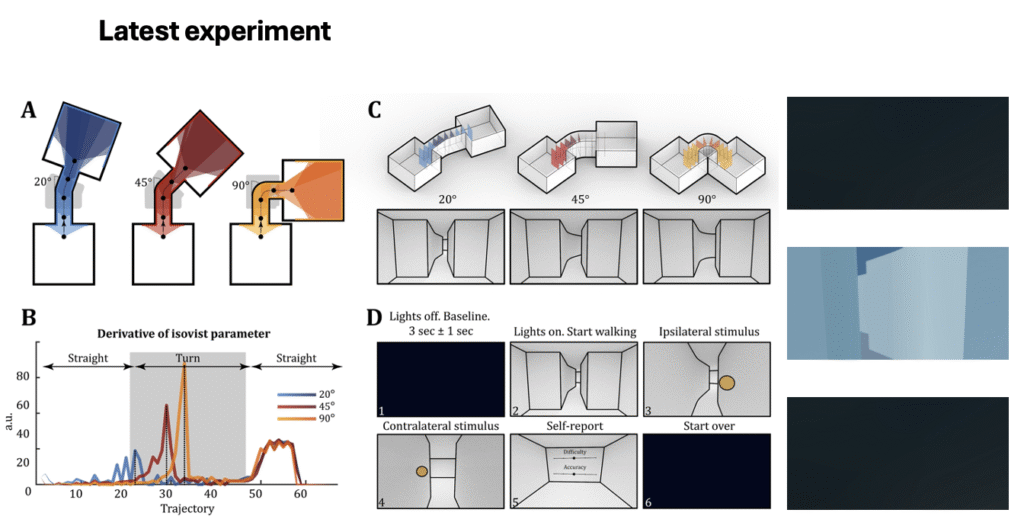
Zakaria Djabbara’s work bridges neuroscience and spatial design, using mobile brain-body imaging to study how movement and perception intertwine.
His experiments reveal that spatial configurations — even turning a corner — alter cognitive load and reaction time.
Architectural form, he showed, has direct neural consequences, shaping attention, memory, and behaviour.
Using examples from driving and walking studies, he illustrated how rhythmic environmental cues subconsciously guide motion and adaptation.
These findings suggest that humans continuously synchronize with architectural rhythms — façades, shadows, distances — without conscious awareness.
Rhythm, he argued, is not a stylistic metaphor but a biological principle embedded in perception itself.
Understanding this relationship brings ethical implications: if design unconsciously influences behaviour, then responsibility must follow..
Sess. 3. 3. – Tamara Lungman – ISGlobal – Spain
Health Impact Assessment Specialist
Focus: Quantifying urban health through evidence and equity.
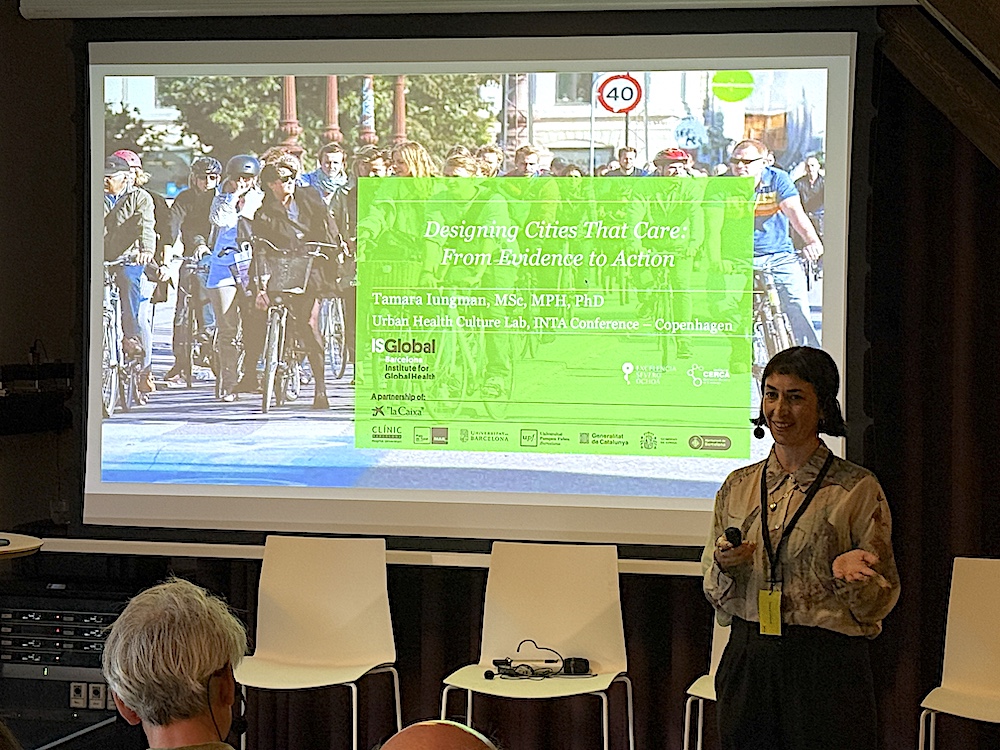

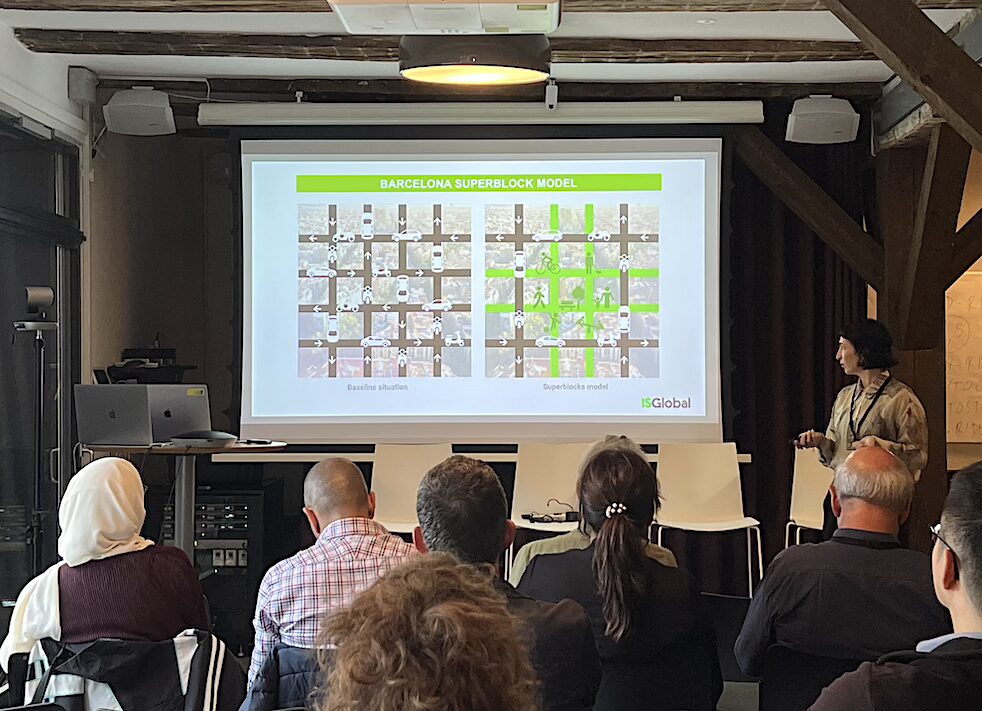

Tamara is a scientist with a PhD in Biomedicine and advanced training in Public and Environmental Health, researching how our cities shape human health through urban planning, transport systems, and green infrastructure. Focusing on Health Impact Assessment as a tool to bridge data, policy, and practice.
Tamara Lungman introduced Health Impact Assessment (HIA) as a practical framework linking urban form, environment, and mortality.
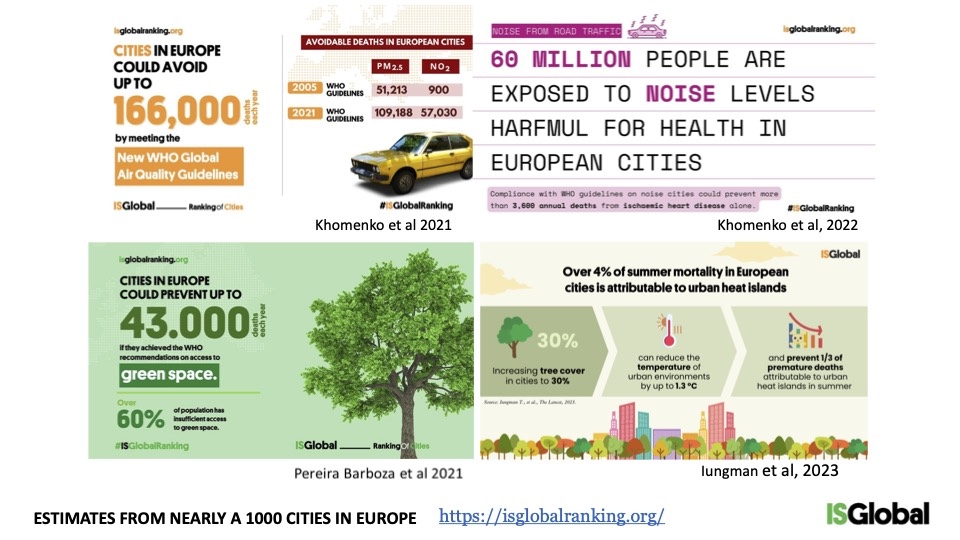
Her research across nearly 1,000 European cities shows how design variables — density, green access, walkability, and air quality — shape health outcomes.
By modelling scenarios that align with WHO guidelines, her team quantifies avoidable premature deaths and mental-health improvements achievable through better urban planning.
Projects such as Barcelona’s Superblocks and Green Corridors demonstrate measurable reductions in pollution, heat, and mortality when streets are reclaimed for people.
Yet she warned that many interventions still favour affluent neighbourhoods, reproducing inequality under a green banner.
True urban health policy, she stressed, requires continuity beyond political cycles and a focus on who benefits.
Nature-based solutions must form part of an integrated, cross-sectoral strategy balancing health, sustainability, and justice.
Her closing message: the evidence is clear — what remains is the courage to act collectively and inclusively.
Sess. 3. 4. – Jakob Norman-Hansen – Director, BLOXHUB
Global urban innovation, Danemark
Focus: Loneliness, belonging, and the paradox of proximity in contemporary cities.

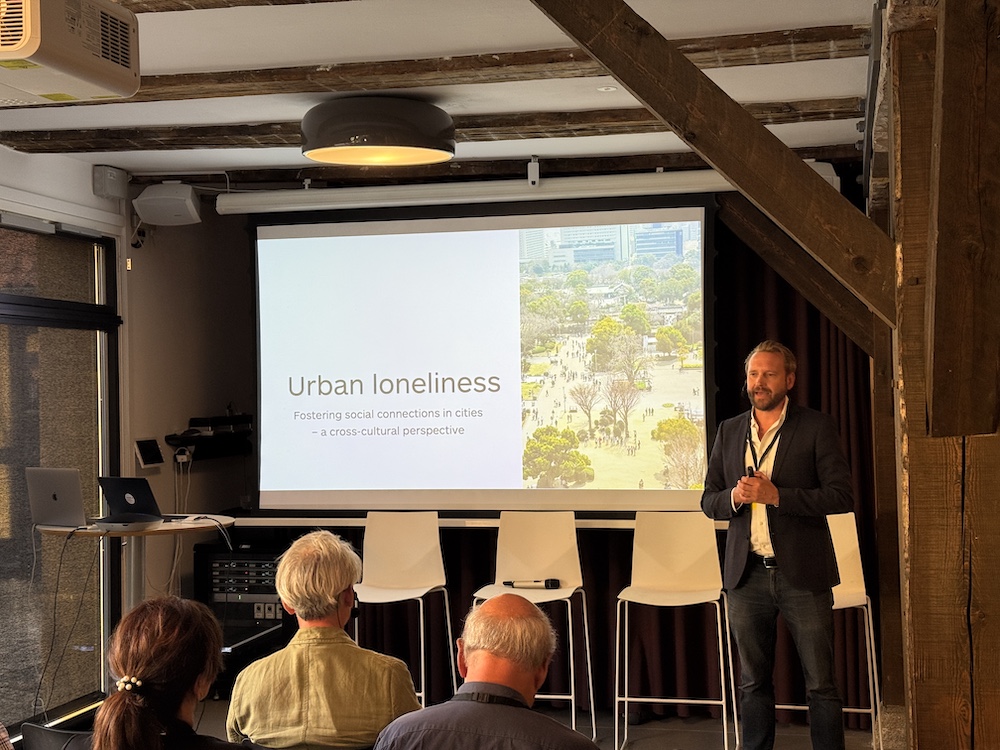


Jakob is a connector of worlds – linking cities, companies, and changemakers to the innovators reshaping urban life. Through global dialogues and Nordic-inspired best practices, he helps spark new thinking about what cities can be: not just livable, but regenerative, resilient, and deeply human
Norman-Hansen explored urban loneliness as a systemic challenge tied to how cities shape connection and identity.
Through The Paradox of Proximity, a forthcoming BLOXHUB publication, he examines loneliness not as illness but as a failure of urban form to nurture community.
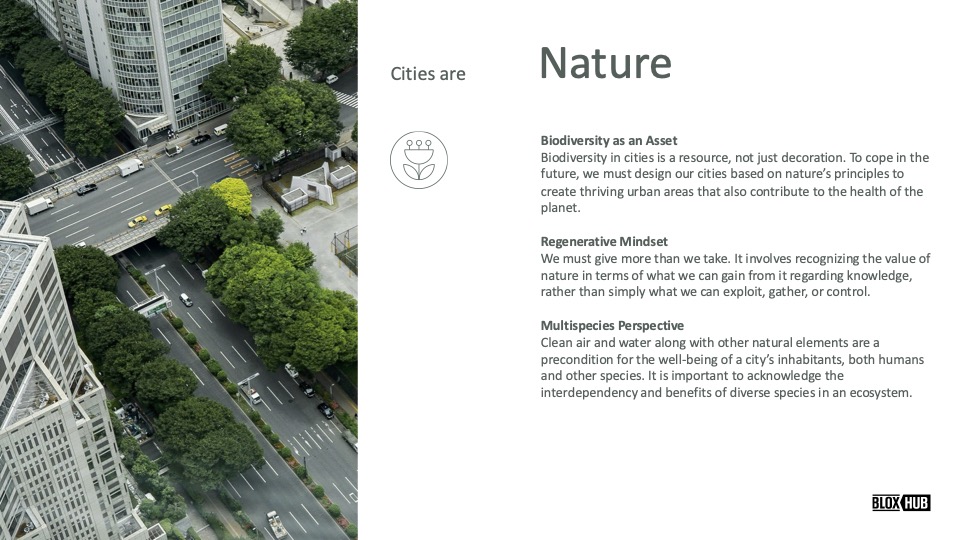
He argued that cities are ecosystems — parts of nature themselves — and that every design decision influences human connection.
Examples such as co-living housing, walkable streets, and participatory networks show how even small interventions can re-activate social life.
Initiatives like Japan’s “clean-up coffee clubs” reveal how simple rituals can rebuild community bonds.
Nature, too, acts as a companion presence — a form of belonging that alleviates isolation without words.
Cycling, walking, and shared public spaces become social infrastructures of care.
His message is that the healthiest cities are not just sustainable but emotionally intelligent — places where weak ties and everyday gestures restore human closeness.villes.
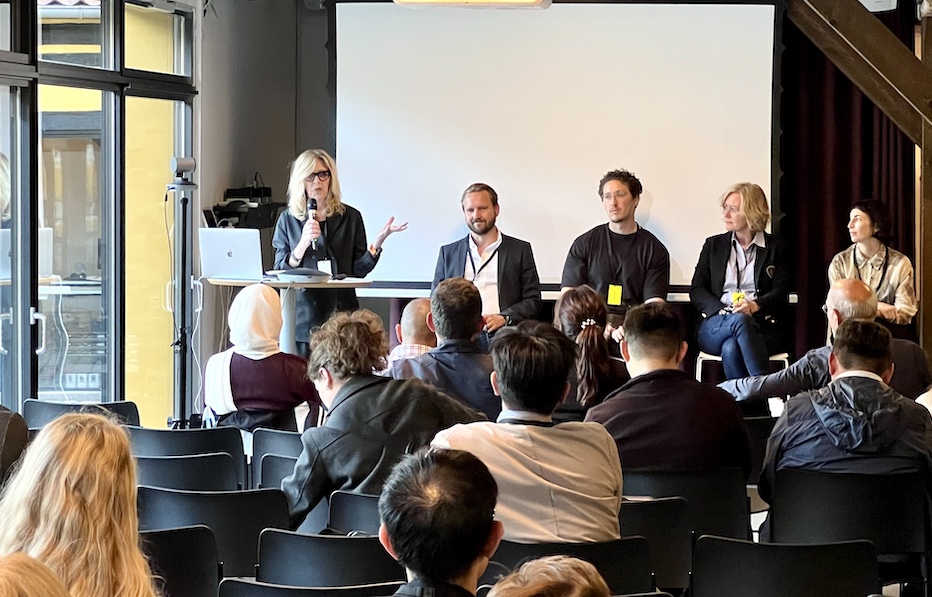
Sess. 3. PANEL DISCUSSION – Closing Remarks: “From Talk to Action”
What does a health-promoting urban environment look like?


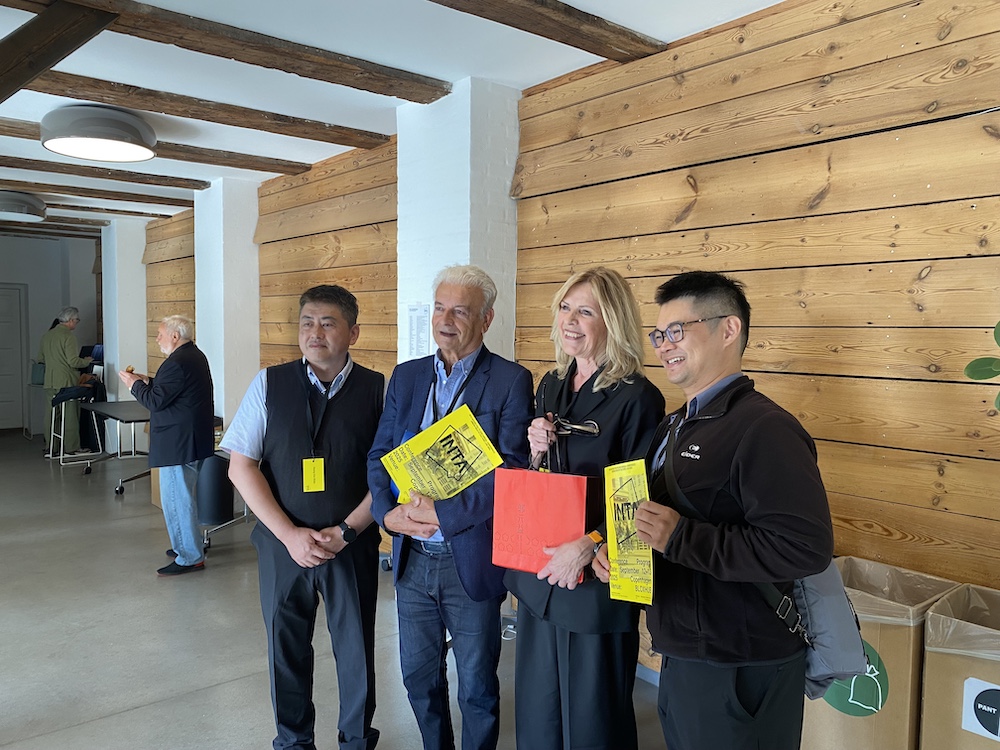

Modérateur : Mark Isitt
All speakers + open mic + Fernando Nunes da Silva, Professor in Urbanism, Lisbon.
The panel explored how the built environment and green spaces significantly influence human behavior and health, but also emphasized the importance of social and cultural factors. Fernando Nunes da Silva highlighted that community networks and a sense of belonging are crucial, as demonstrated during the COVID-19 pandemic when neighborhood solidarity helped people cope better with challenges.
Jakob Norman-Hansen noted that the pandemic increased the importance of local neighborhoods and community bonds, but also led to greater screen dependence and social isolation among young people. Citizen participation is seen as essential, but it must be supported by scientific evidence and research to guide decision-making.
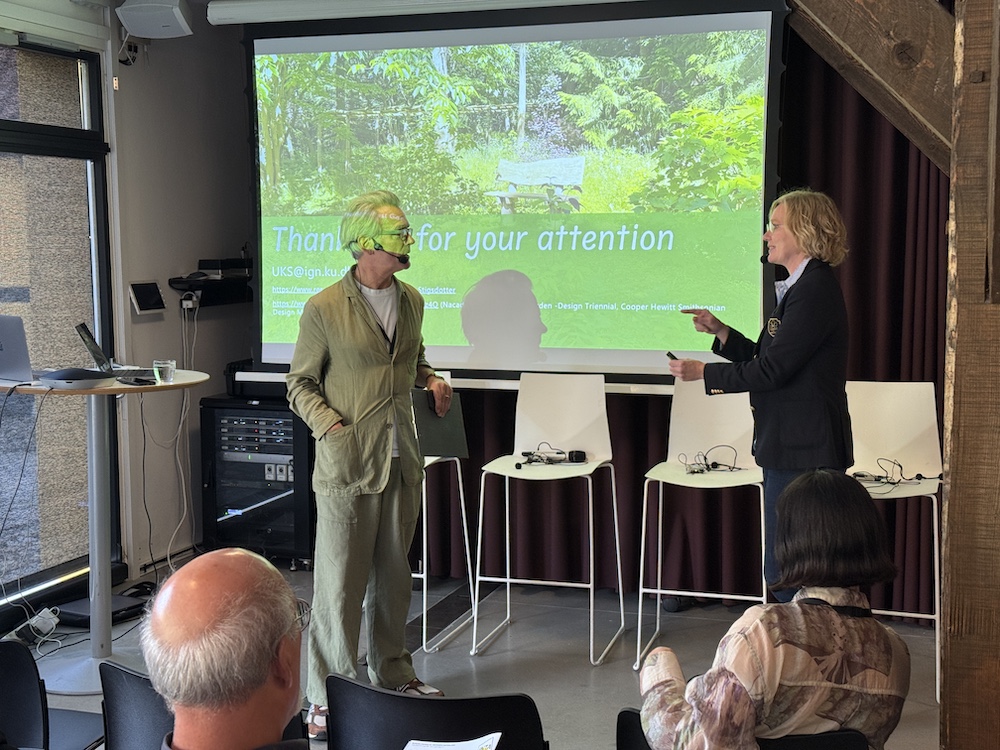
Ulrika Stigsdotter stressed the need to design high-quality natural spaces tailored to users’ real needs, not just professional preferences.
Tamara Iungman discussed the limitations of epidemiological studies and the need to combine different approaches to understand behavior and the effects of urban interventions. She pointed out that green investments often benefit wealthier neighborhoods, raising equity concerns.
Closing remarks by Helle Juul – President of INTA
I just googled the World Health Organization’s definition of health. It says: “A state of complete physical, mental, and social well-being—not merely the absence of disease or infirmity.”
Yeah, I’m not entirely sure I totally agree, because I don’t think it’s that simple.
When I worked through these three themes and selected all these fantastic speakers, it became clear how diverse and complex this topic is. And I think we all have a lot to take home and reflect on—that’s for sure.
I’d like to quote Paul Valéry, who once said, “The future isn’t what it used to be.” » I’ve always loved that quote, and after today, I think it’s truer than ever.
We’ve spent many years working on the idea of a future urban health culture, and I promise you that next time I’ll talk about it a lot more – because it’s really worth exploring in depth.
So let me say thank you to everyone who participated in the panels and debates, and especially to Mark Isitt.
Finally, if you have any comments, ideas, or pilot projects that you think INTA could be involved in, please get in touch. We’d love to collaborate and continue this dialogue. So, thank you so much to everyone – for everything – and thank you also to Bloxhub, because it’s truly a wonderful place.