
Introduction and Framing
INTA President Helle Juul opened the session by framing its central question: how can urban development not only respond to crises but actively strengthen resilience and human well-being? She noted that cities worldwide face multiple overlapping challenges — climate change, social inequality, housing shortages, migration, and public health — making the way we design, govern, and inhabit cities more critical than ever.
Two speakers were introduced: Anne Bach Nielsen (Associate Professor, University of Copenhagen) and Camila Jordan (Director of Institutional Relations and Advocacy, TETO Brazil), both invited to explore how the principles of the humanising city can build urban resilience in times of crisis.
Helle Juul briefly underlined INTA’s long-standing engagement on these issues, highlighting the association’s work through strategic advisory services, international panels, expert forums, and cross-sector dialogue between public and private stakeholders.
oOo
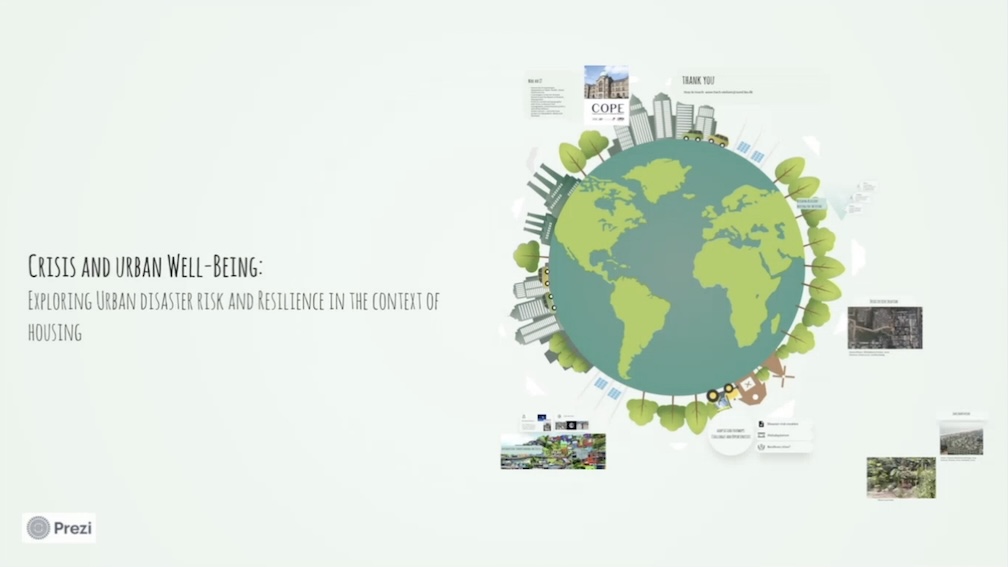
Anne Bach Nielsen – Exploring urban disaster risk and resilience in the context of housing
Introduction
Thank you so much for inviting me, Helle, and thank you all for listening and joining the call today. I am going to talk about crisis and urban well-being from a disaster and crisis perspective. I am a disaster and climate change scholar, but also a social scientist. That means I study disasters, crisis and urban well-being from a social science perspective, with a particular interest in questions related to people and power — very much related to the concept of the humanising city.
A SOCIAL SCIENCE PERSPECTIVE
That also means that I am not an architect and not an urban planner. I am based at the University of Copenhagen, affiliated with the Copenhagen Centre for Disaster Research, an interdisciplinary team of researchers trying to understand the interlinkages between disasters and society from many different fields of study. I also have a fairly global outlook. I work quite a lot in Europe, but also abroad, often in close connection with local partners. Some of the examples I will give today come primarily from a project in Bangladesh and from research I conducted in India. It is important to me to give credit to the remarkable people who are in the field and who support the research we conduct on site. Currently I have projects in Copenhagen, Bangladesh and Kenya, looking at disasters and vulnerability in cities, and thinking about how local actors can support a more resilient pathway for handling some of the crises we are seeing.
WHAT IS AN URBAN CRISIS?
Crises and disasters are not external events — they are produced by the way we plan, design, and inhabit our cities. Anne Bach Nielsen argues that understanding urban crises requires a social construction lens: the economic, political, and social structures that shape our cities determine both exposure and impact. Using COVID-19 as an illustration, she showed how the same crisis hits radically differently depending on where and how people live. Beyond exposure, she stressed the need to address vulnerability — asking not just who is at risk, but why — and called for acknowledging the deep inequalities that exist both globally and within cities.
The programme aimed to create jobs and provide affordable housing for the urban poor, with the assumption that rents would cover costs and that local agencies would manage the projects.
THREE MACRO TRENDS
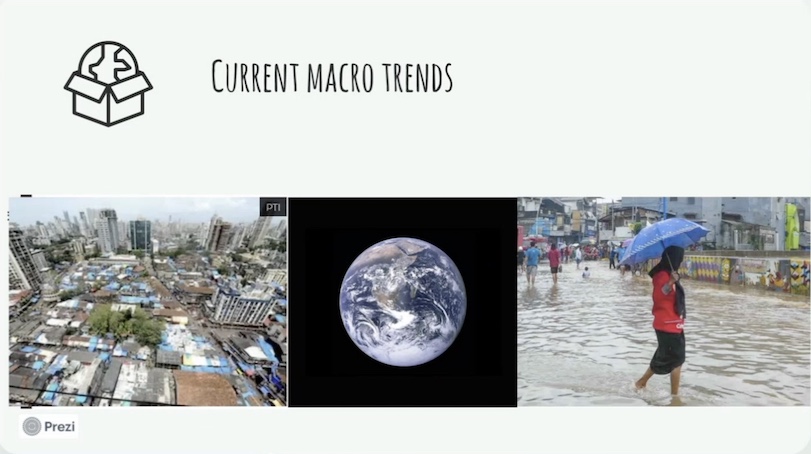
The first and most significant trend driving the global housing emergency is rapid urbanisation. The massive influx of people into cities — particularly in low-income areas and the Global South — is outpacing cities’ capacity to provide adequate housing and services. Dhaka, Bangladesh, illustrates this acutely: the city cannot absorb the daily arrival of people seeking work and better livelihoods, generating deeply precarious living conditions for a growing share of its residents.
The second trend is globalisation and the accelerating interconnectedness of today’s world. The speed at which people, capital, and information now move amplifies the complexity of managing crises: both the 2008 financial crisis and the COVID-19 pandemic demonstrated how rapidly shocks can propagate across borders, leaving little time for localised responses.
The third trend is the convergence of multiple environmental crises. Drawing on the planetary boundaries framework, Anne Bach Nielsen noted that we are exceeding the Earth’s capacity on several fronts simultaneously. Climate change intensifies natural hazards and deepens the housing emergency — but not equally: those living in unsafe locations, such as floodplains or areas with little green infrastructure, bear a disproportionate share of the risks of flooding and extreme heat.
ADAPTATION PATHWAYS
The three macro trends are driving adaptation efforts at multiple scales across cities worldwide. While some are strategically planned and yield positive outcomes, others result in maladaptation — unintended consequences that worsen the original problem. A third category deserves particular attention: forced adaptation, where people have no choice but to act — such as migrating from vulnerable coastal areas to cities in search of survival. Far from reducing risk, this type of adaptation typically generates new layers of disaster risk for the most vulnerable.
FIELD CASE: DHAKA, BANGLADESH
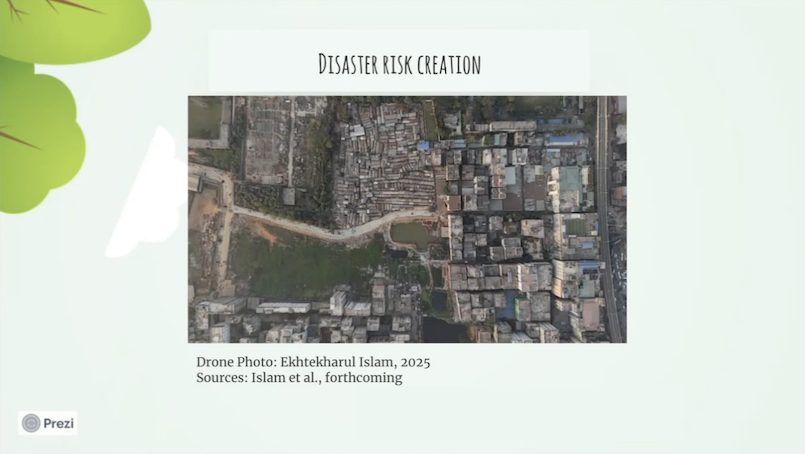
Dhaka field site, documented through drone photography by Ekta Kha, tracks how rural and coastal migrants settle in informal, underserved urban locations and how this shapes their livelihoods. During the research project, Bangladesh’s political upheaval — a protest movement and change of government — directly disrupted the field site: half of the tracked residents were abruptly evicted. Drone footage captured the result starkly: a newly built road dividing an empty cleared plot from the remaining cluster of iron and tin shacks.
Post-eviction interviews revealed two striking realities. Despite objectively poor conditions — an informal settlement on a floodplain built over a former rubbish dump — many residents had lived there for 5, 10, or even 15 years, developing a genuine sense of place, stability, and community belonging. That fragile but real foundation was erased overnight: one day they were told to leave, and the entire community was demolished.
The Dhaka case illustrates a self-reinforcing cycle of disaster risk creation. Displaced from rural and coastal areas, migrants settle in the city’s most precarious locations — only to face eviction, demolition, and displacement again. Each move pushes them further into vulnerability, trapping them in a continuous loop of instability and marginalisation at the fringes of urban life.
FIELD CASE: CHENNAI, INDIA
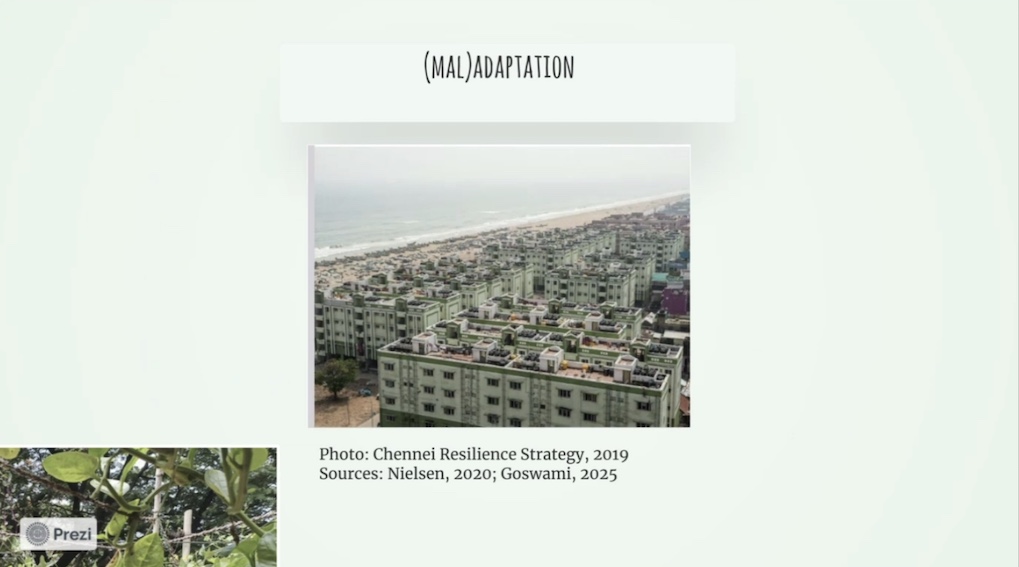
A three-year study of the Chennai Resilience Strategy examined the real-world impact of post-tsunami resettlement programmes from the early 2000s. Coastal residents — many affected by the 2004 South Asian tsunami — were relocated to modern peri-urban housing, reducing their flood exposure. However, the move generated significant new hardships: residents were cut off from their workplaces, fishing grounds, and the communities, cultures, and places that gave their lives meaning and stability.
A second round of interventions sought to correct the mistakes of the first, placing community involvement and residents’ own aspirations at the centre of project design. A rooftop urban garden initiative — still active today — exemplifies this shift: Chennai’s characteristic flat rooftops were transformed into productive green spaces supporting community life, food security, and urban cooling in a city regularly exposed to extreme heat. These projects represent genuine lessons learned, consciously designed to avoid the maladaptation that undermined earlier efforts.
CONCLUSIONS: THE THREE P
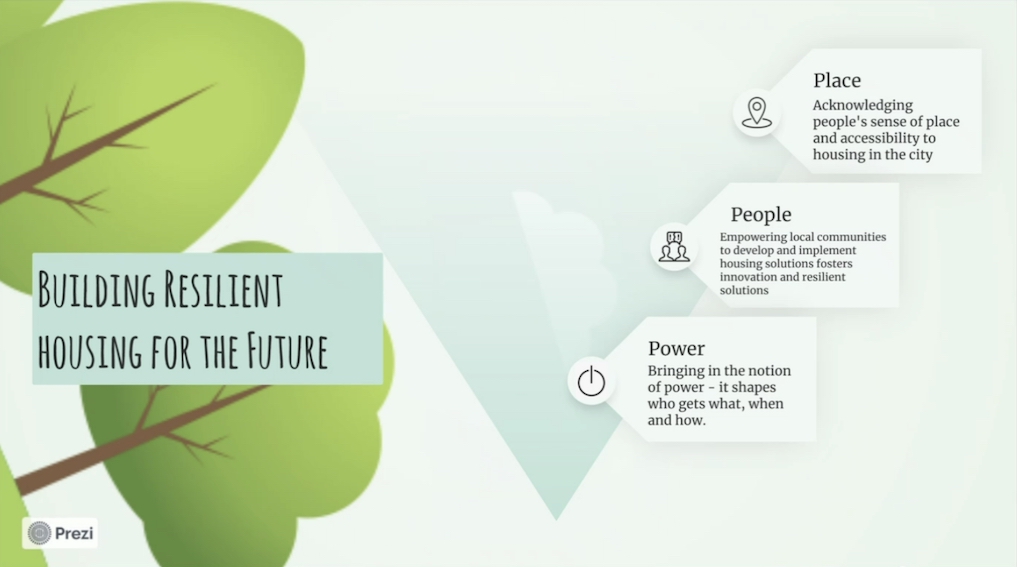
Anne Bach Nielsen closed with a three-part framework for addressing urban housing crises:
Place — urban development must acknowledge residents’ sense of belonging, local culture, and context, and ask fundamental questions about access: who is the city for, and who gets to live where?
People — community-driven approaches consistently deliver more resilient outcomes than top-down interventions; local communities must be empowered to shape and implement housing solutions.
Power — understanding who controls the movement of people and the flow of money is essential to achieving lasting change. The Dhaka eviction illustrated this with stark clarity: years of hard-built stability were erased overnight by political decisions acting on the informality of residents’ tenure. Who decides who gets what, when, and how remains a defining question of the current housing emergency.
-o0o-