
INTA President Helle Juul opened the session by framing its central question: how can urban development not only respond to crises but actively strengthen resilience and human well-being? She noted that cities worldwide face multiple overlapping challenges — climate change, social inequality, housing shortages, migration, and public health — making the way we design, govern, and inhabit cities more critical than ever.
Two speakers were introduced: Anne Bach Nielsen (Associate Professor, University of Copenhagen) and Camila Jordan (Director of Institutional Relations and Advocacy, TETO Brazil), both invited to explore how the principles of the humanising city can build urban resilience in times of crisis.
Helle Juul briefly underlined INTA’s long-standing engagement on these issues, highlighting the association’s work through strategic advisory services, international panels, expert forums, and cross-sector dialogue between public and private stakeholders.
oOo
Camila Jordan – Housing justice, including emergency shelter construction
and community development projects.
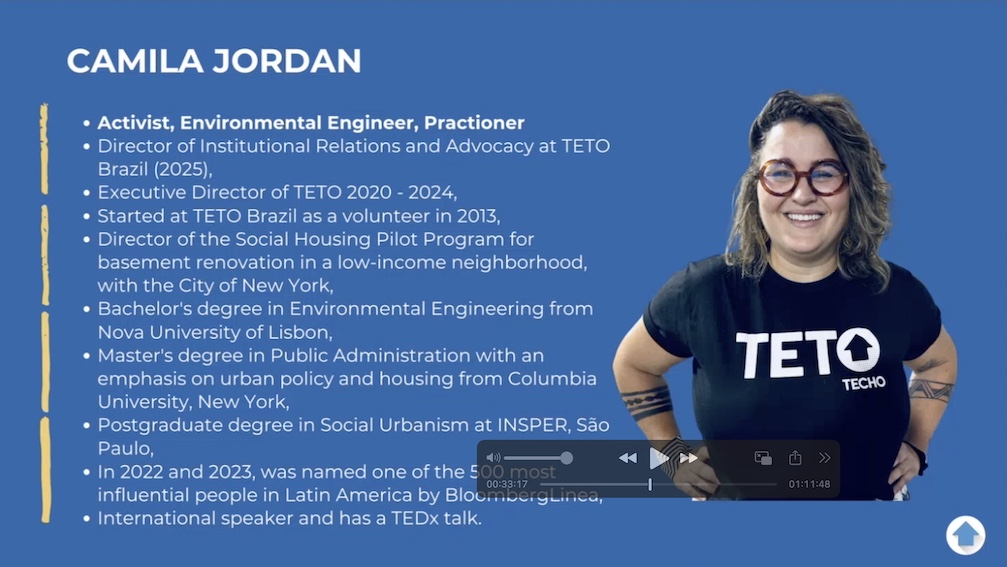
Camila Jordan, environmental engineer, urban planner, and public policy researcher, brings both academic expertise and 13 years of hands-on experience with TETO, a Latin American housing organisation. Originally from Colombia, she recently completed a post-graduate degree in social urbanism in Brazil — a methodology largely shaped by the experience of Medellín.
Introduction
Thank you so much for having me. For you this is a winter session; for me it is a summer session since I am in the Global South — but I am very happy to be here. I think we need more spaces like this, where different countries and different perspectives come together.
The most important thing to know is that I started as a volunteer at TETO — a Latin American organisation — and have been with them on and off for the last 13 years in different capacities, from volunteer to Executive Director and now Director of Institutional Relations.
THE BRAZILIAN CONTEXT
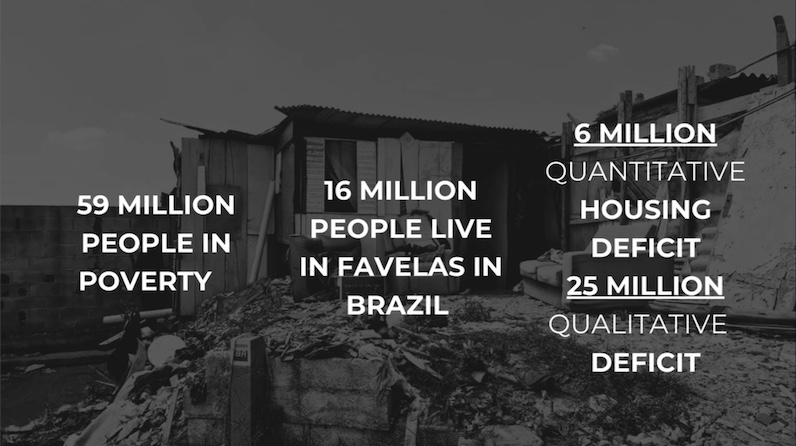
Brazil is home to 59 million people living in poverty — a figure comparable to Colombia’s entire population — making it one of Latin America’s most affected countries. The housing crisis is acute: 16 million people live in favelas, 6 million housing units are missing, and 25 million households face qualitative deficits, most of which were self-built without professional support. Crucially, TETO’s focus is not the large, consolidated favelas visible in images of Rio de Janeiro — communities with social capital and a path toward urban integration — but the hyper-vulnerable settlements where 40% of residents still live in wooden shacks or makeshift structures: what Camila Jordan calls the housing emergency.
THE HOUSING EMERGENCY: AN INVISIBLE CRISIS
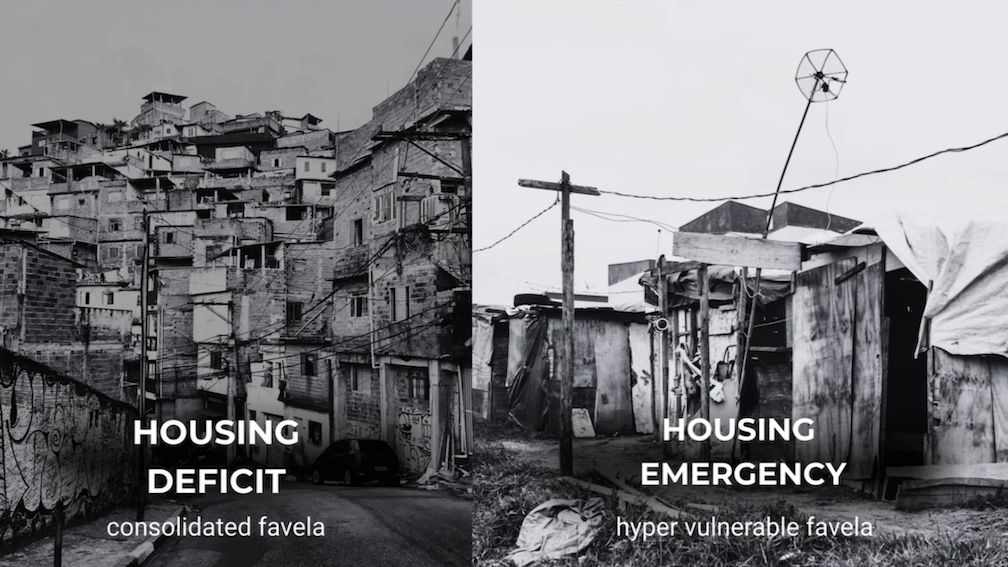
No public policy in Brazil specifically addresses families living in the housing emergency. The country’s main housing programme — Minha Casa Minha Vida — is credit-based, making it structurally inaccessible to those living in wooden shacks. The housing emergency is defined by an accumulation of deprivations: precarious self-built structures, no sanitation, no insulation, unsafe water and electricity connections, exposure to flooding and landslides, and a complete absence of privacy. This invisible crisis preceded the climate emergency — and is now being actively amplified by it. The structures of vulnerability were already embedded in society; climate change is accelerating their consequences for those who contributed least to it.
A HUMAN STORY
Camila Jordan put a human face on the housing emergency with a personal account: a mother living with her ten-month-old in a shack that flooded to 70 centimetres with every rainfall, while snakes entered through holes in the floor. Forced to stand on a table for hours, utterly isolated and depressed, she embodied the daily reality of those living in the housing emergency. A new house changed everything: it gave her the prospect of a future. Her daughter, previously unable to crawl due to unsanitary conditions, began crawling and then walking sooner than expected.
“The houses for us are not just homes — they are hope.”- Community leader Lidwina
WHY THE HOUSE MUST COME FIRST
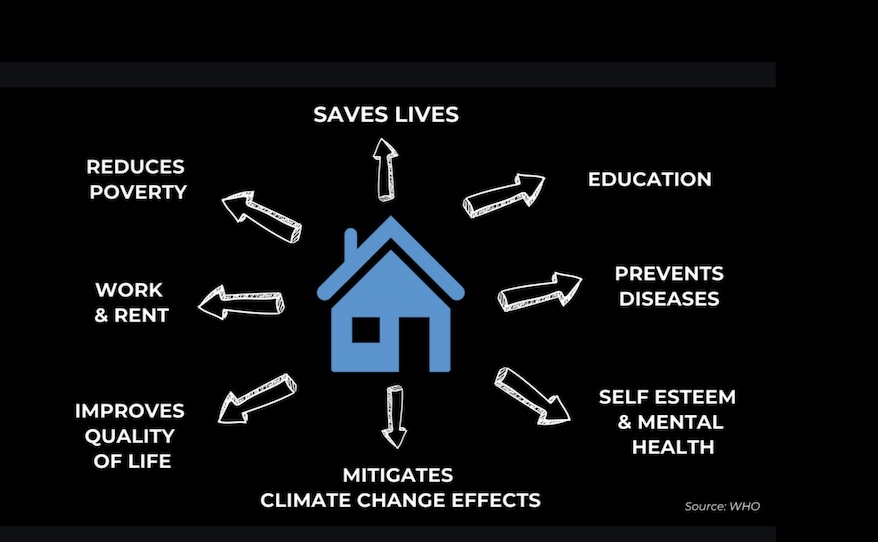
TETO’s core conviction is that the house must come first — even a transitional one — because people are already living in a permanent state of emergency that precedes climate change. Adequate shelter is the foundation for everything else: saving lives, preventing disease, restoring self-esteem, supporting mental health, and reducing poverty. This position is shared by the World Health Organization.
THE TETO MODEL
Founded in Chile nearly 30 years ago and now present in 18 Latin American countries, TETO mobilises young volunteers to build houses in partnership with communities, using the mutirão methodology — collective community work — to construct 5 to 20 houses in a single weekend. In Brazil, TETO has reached over 5,200 families and mobilised more than 100,000 young people across six states and the Federal District.
THE SCALE OF THE CHALLENGE
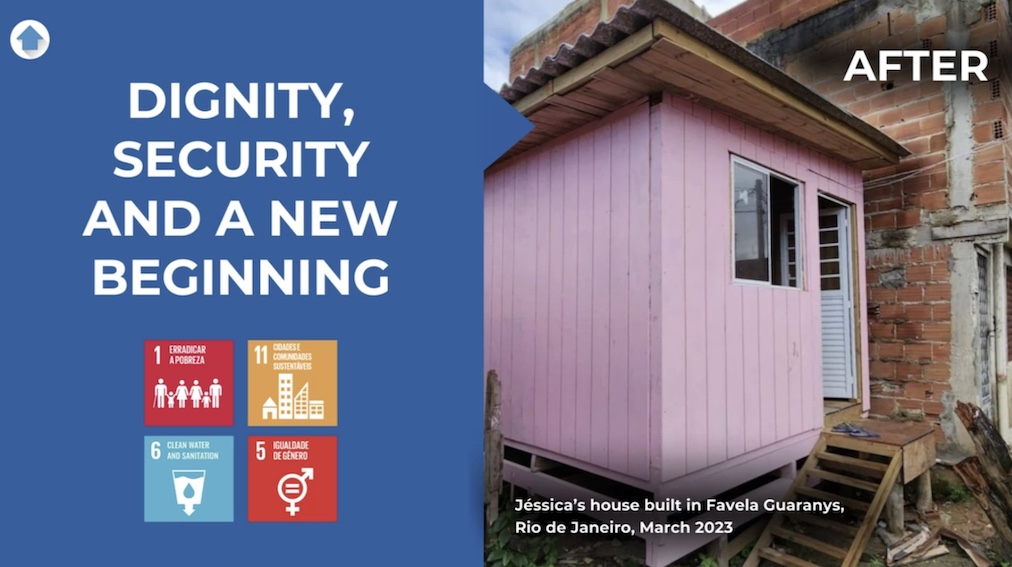
The scale of Brazil’s housing emergency defies easy solutions: at the rate of one favela urbanised per week — already an unrealistic target — it would take 230 years to integrate all informal settlements into the urban fabric. With over 5,000 municipalities, most lacking the resources and technical capacity to act, the communities without social capital or collective voice are simply ignored. Those bearing the heaviest burden are Black women raising children alone — the group most affected by Brazil’s housing deficit.
THREE PROTOTYPES: TETO’S HOUSING SOLUTIONS
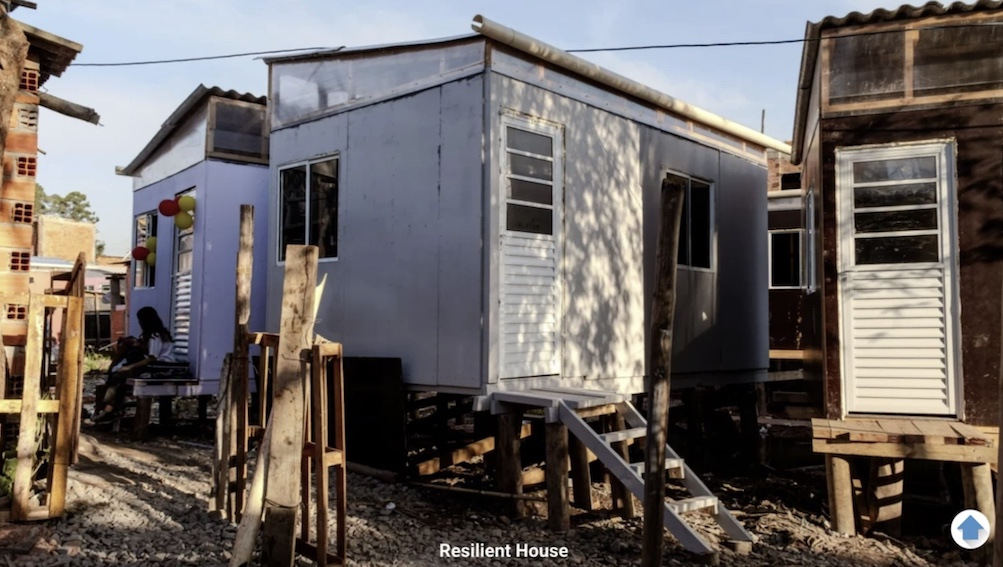
Emergency House — built over 30 years across Latin America. Constructed in two days by volunteers. The family participates in the build, bringing a great deal of transformation to how the family sees themselves and mobilising the community.
Seed House — a larger house with a room, kitchen and bathroom. Takes approximately 10 full days to build. Requires more technical expertise. Designed in part to attract government partnerships.
Resilient House — prototyped in 2024, deployed in 2025. This is the focus of today’s presentation.
THE SOCIAL TECHNOLOGY
TETO is not a construction company. We do not go in, build, and then say goodbye. We have a complete process and methodology for accompanying families, mobilising communities, and bringing tools for community development processes. Active listening is embedded in our DNA as an organisation.
The combination of technical work, social work and community development ensures that the impact goes beyond the physical construction. The mobilisation of young people and community participation is also very important for changing the paradigms around communities that have been made invisible — whose members have felt invisible for most of their lives.
VOICES FROM THE FIELD
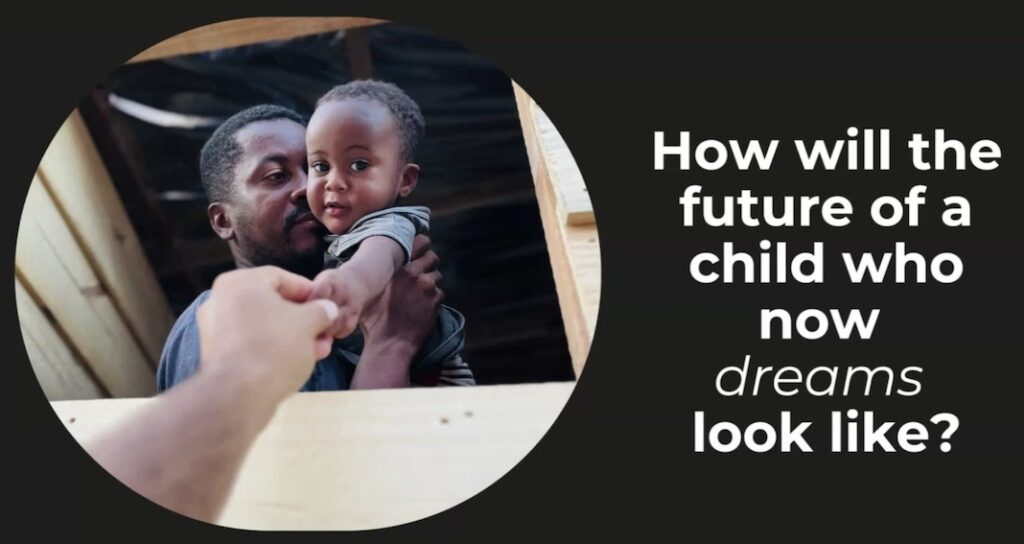
Mirjeli — photographed a few weeks after the construction of her house — said:
“Together we built the house with volunteers, and we did it in two days. On the third day, it rained heavily. If I had still been in my old shack, I would have lost everything.”
Paulina — after losing her belongings multiple times to flooding and being too ashamed to receive visitors in her old house — said at the end of her interview:
“Now my children sleep. And now, they also dream.”
RESEARCH AND RESOURCES
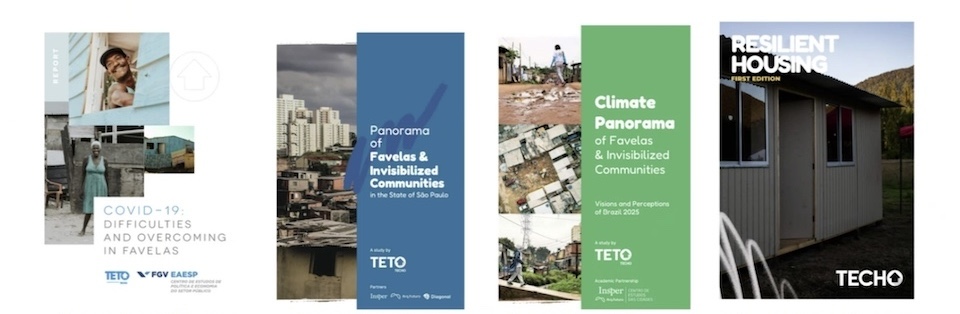
We have a strong tradition of research and impact evaluation at TETO. I invite you to consult the Climate Panorama — a study conducted on how residents in 119 communities across all regions of Brazil perceive climate change, what solutions are already emerging from within those communities, and what solutions they want governments to invest in.
If we approached the adaptation process from a bottom-up perspective, it would be much faster — because communities already know what needs to be done. All publications referenced today are available in English.
-o0o-